
HOW DOES DIGITAL TECHNOLOGY IMPACT HIGH SCHOOL LEARNING?
Before the Pandemic the technology was viewed as an unnecessary evil and distraction for students but after a year and a half in a pandemic, the perspective of teachers changed when remote learning become the lifeline for students’ education. Teachers and instructors realize the power of digital technology which can increase students’ engagement, collaboration, spark innovation and enhance their learning.
Technology in the classroom has the potential to improve teaching and learning by allowing personalized, mastery-based education; saving teachers time, and equipping kids with digital skills they will need for future employment. Indeed, remote studies have demonstrated that customized blended learning improves student results. Controlled experiments have revealed significant gains in learning outcomes through personalized blended learning during the pandemic.
What is blended learning?
Blended learning is a method of instruction in which students learn both online and face-to-face interaction with teachers also known as hybrid learning. It is a combination of multimedia components, live video, and chats for interactive discussions and traditional physical classroom, both are individually advantageous. It offers more engaging learning and better opportunities for students to work independently and in a classroom with their respective teachers to achieve subject mastery.
Easy Access to resources/information:
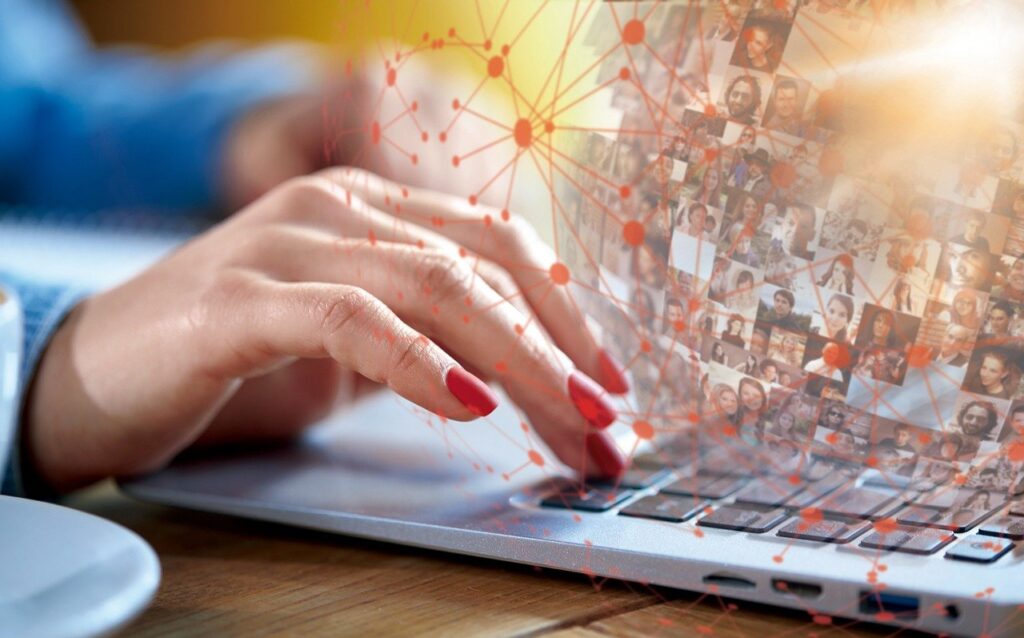
We can have access to information at the touch of a button. We may obtain up-to-date knowledge on anything available online. It’s no longer necessary to go to the library and waste time hunting for what you need. Now, all of this information is fully digitalized and readily available online, making learning easier, writing professional papers more efficient, and obtaining new knowledge considerably easier.
Students may also discover new things by interacting with their classmates via internet groups and utilizing cloud-based programs to collaborate on group projects. This is a great way of enhancing their communication skills. Teachers may also use google classroom or course-specific software to provide course material.
Increase engagement of students:
New century technology can engage students more by making learning interactive and collaborative. Students are more likely to participate actively when they have access to touchscreens or mobile device screens. With the help of technology, students may take photos and videos during field trips for further study reference instead of fumbling with paper notebooks. They learn through critical thinking instead of memorizing the facts. They participate in interactive quiz sessions or play educational games or science experiments or group discussions on social media platforms.
Medical schools are increasingly using virtual reality in the classroom, and students find it to be an effective tool for learning difficult topics such as anatomy, which is typically easier to grasp with hands-on experience.
The use of technology in the classroom has the potential to reduce boredom and increase motivation, engagement, and academic achievement while promoting creativity. It is an essential tool that can help teachers cater lessons to meet the needs of each student as well as enhance their understanding by providing visual aids.
Personalized Learning:
Teachers could hardly dedicate themselves to each student equally, and adapt the material to their learning pace. It was very challenging to make sure all the students understood what they were being taught, especially in large classes with diverse abilities and needs.
Personalized learning is a teaching method that customizes course content based on student performance data collected over time by using computer-adaptive tests (CATs). The information gathered from CATs helps teachers in making informed decisions about what, when, and how to teach students. Teachers can monitor the progress of every student through their device screens during lessons or at home via online platforms. This makes teaching easier as there is no need for teachers to assign homework anymore since all learning has moved into the digital realm.
Improved Teamwork:

Technology has improved cooperation among students, especially when they are not in the same location, but have to work on joint projects or presentations. They can share their device screens or projectors for better understanding and collaboration via online platforms, making group work more efficient as all individuals have access to the same information at once.
Technology also provides students with the opportunity to interact more freely and work together as a team for new assignments. For example, teachers can upload video lectures or slides on device screens that require group participation such as science experiments. This is also beneficial in education because it enables all students to access expert knowledge from their peers at any time instead of always depending on the teacher.
As technology advances and becomes more affordable, its use in education will continue to increase. Technology has a great impact on students, whether it be increasing engagement or allowing for personalized learning. With the help of new technologies, teachers are now able to cater lessons to meet the needs of each student as well as
Motivate For Self-paced Learning:
Students who were having difficulties learning new ideas in a regular classroom would quickly fall behind their peers. Students may engage in self-paced study components as part of the learning process, allowing them to learn at their own pace and master difficult concepts before moving on to new ones.
There are many online resources that students can use to help with this, such as Kahn Academy videos or quiet educational websites that cater to different levels.
This is a great way for struggling students to get the individual attention they need without feeling embarrassed in front of their classmates and allows them to work at their own comfortable pace.
Self-paced learning not only helps students who are struggling but also motivates bright students to move ahead quickly. With the help of technology, they can get more out of their education by progressing through the material at a pace that is comfortable for them without feeling rushed or held back.
The use of technology in the classroom has made it easier for students to learn and teachers to teach, improving academic performance by providing personalized learning methods that cater to individual needs.
Advance innovative teaching techniques:

The way we get information has changed, as well as how we are taught it. The instructor is becoming less of a “sage on the stage” and more of an advisor or guide.
Personalized learning is not just limited to device usage but it has transformed into using educational technology that provides students with different tools for developing their skills, making them better learners in the process.
With technology constantly evolving, educators need to keep up with new trends and find ways to apply them to their teaching practices.
That’s why teachers use new technologies when they teach. It can be to present material more creatively and interestingly, motivating students to learn by providing various activities that appeal to different types of learners or helping teachers assess what their students know and where they need help.
High school students are constantly influenced by the world they live in, and technology is becoming an essential part of education as it provides different methods for learning new skills that can boost student performance.
When teachers use device-based personalized learning strategies, they help students become self-directed learners who work independently during lessons. As a result, students feel more confident in their abilities and have a better understanding of the material they are learning.
The use of technology has become commonplace in high school classrooms as it provides various advantages for both teachers and students.
Digital Technology as an intact-part of Education
21st-century abilities will require new ideas based on technology for everyone to have an equal chance of achieving their goals. Technology in education has a beneficial influence on kids who do much better with tablets, computers, and phones than with print textbooks due to their interactive nature. Interaction is critical, and it may be obtained by utilizing all of the modern digital technology and the classroom.
Even though technology in the classroom has revolutionized education, books will always be vital, and so will teachers. Educational technology is changing all the time, and schools are modernizing, but the aim remains unchanged – to provide knowledge to youngsters and assist them in achieving success in the real world.
In addition, a report by the National Education Association (NEA) stated that “the use of technology can have a positive impact on student achievement, motivation, and engagement.”
The report also stated that “technology can help all students learn by providing access to individualized instruction, more differentiated learning opportunities, and supports for English Language Learners (ELLs) and students with disabilities.”
How can new century technology improve learning for students?
The greatest advantage of technology is that it allows for a more effective learning process. Students in modern generations are more comfortable with multimedia content than with textual material. Most children respond favorably to the material presented in a modern, interactive format, resulting in a more thorough understanding with less effort.
Immersive experience can be achieved in different ways, depending on how we use modern learning resources:
1. Augmented Reality (AR)

We’re still waiting for Google Glass, gaming, and fantastic apps for astronomy to deliver AR’s world-shaking impact. The AR capabilities are expected to wow viewers with its functionality, which allows users to access extra information that is overlaid on top of what they see through the lens.
This method entails real-time viewing of the environment with interactive virtual content on the screen via a mobile camera. To provide an even more immersive experience, additional technologies, such as AR headsets, are being created.
Some practical applications of AR that could be used in the classroom:
-A student studying a historical building can see what it looked like in its prime by overlaying an image of the original building onto the view of the current structure.
– A science student can watch a video demonstration of a chemical reaction as it takes place, with the relevant molecules appearing as if they are floating in the air around them.
– A history student can see a three-dimensional model of how an ancient city looked, with pedestrian traffic and other details that would be difficult to recreate without AR.
2. 3D Printing

What could be a better technology for a student than a 3D printer, which is designed specifically for students? The 3D printer should be required equipment in all classrooms. Students in the classroom of the future may create 3D models for several purposes instead of being limited to what they can do with paper.
This device can be used to create anything ranging from a small plastic toy, an educational tool that illustrates the structure of their body, or any artwork they may want to decorate their room with. With this technology at our fingertips, students can learn creatively through hands-on experience and gain future skills by producing tangible items.
Libraries and museums are also taking advantage of this device, creating a new way to engage with visitors. For instance, a student can see a recreation of an ancient building or artifact that they would not have access to otherwise. This technology is gaining popularity among students as well as adults who relish the simplicity and relative cost-effectiveness it has in comparison to other technologies.
3. Online Social Networking
This type of technology should not be underestimated when it comes to its ability to help us learn. The use of social networking sites in the classroom can provide a wealth of resources for both teachers and students. Most importantly, these sites provide a way for educators to connect with other educators around the world who may have more knowledge and experience in the subject they are teaching.
In addition, social networking sites can be used as a way for students to connect and collaborate on projects outside of the classroom. This type of interaction is beneficial because it allows them to learn about different cultures and customs that they may not have otherwise been exposed to.
Many colleges have already registered themselves with the internet virtual world Second Life to provide students with an online platform to interact with each other. Students may freely share their ideas on such social networks, and teachers maintain control.
This is a powerful notion since it will instill in pupils a new sense of empowerment – that knowledge acquisition is a personal responsibility and not the teachers.
Furthermore, with this many-to-many interactive learning environment that allows for a free exchange of ideas, it will be more aligned with real-world situations where cooperation is the norm. To improve collaboration and team building, social networking tools might be integrated.
4. Virtual reality (VR)

VR which immerses the user in a simulated environment – is also being used in some schools. The virtual reality headset is one of the most recent technological advancements in the area of immersion. It enables you to explore distant areas, visit museums, participate in space travel, and so on thanks to its sophisticated software.
Users experience a realistic experience as a result of the VR device that records head and hand movements, causing them to feel like they are in a real-time action scenario. This learning technique has been used in the film industry for quite some time (particularly in video games).
This technology can be used to immerse students in different cultures and help them learn about other parts of the world. It can also be used to teach science, history, and math concepts in a more engaging way. VR headsets such as Oculus Rift and HTC Vive are being used in some schools to provide students with an immersive learning experience.
As we can see, technology has a tremendous impact on education and the way we learn. With new technologies being developed every day, the future of education is looking brighter than ever.
Technology Impact on learning:
The Organisation for Economic Co-operation and Development (OECD) administered the Program for International Student Assessment (PISA) to 15-year-olds in several countries. The student survey on information and communications technology (ICT) specifically focuses on students’ use of technology at school, for homework, and more broadly.
After analyzing the data obtained from 340,000 students from 51 countries they found the key findings on the use of technology in education.
– Type of Device Matters
While technology has had a great impact on education, device choice is still an important matter when it comes to using technology in the classroom. The device we choose should be able to run educational software and connect with the internet without any problems. It is also important that the device is durable.
Laptops and tablets in the classroom harm student performance, according to recent research. Students who use laptops score five points lower on the PISA math exam, however, scientists and reading scores are not significantly impacted. In every subject, students who utilize tablets in the classroom perform half a grade level worse than those who do not.
– Geographical Importance on Technology
Geography also matters for device use in education, because Internet availability and speed vary greatly across the world. Researchers have found that students who lack access to digital resources often fall behind their peers over time, which can lead to lower performance levels overall. However, even when technology is available at home or school, there are still obstacles to device use. In some cases, device access is limited by geography or income level.
According to the World Bank Group, many children in low-income countries did not participate in remote learning, even if the device was available.
For Example, In all areas except the United States (representing North America), students who use laptops in school score between five and 12 PISA points lower than those who do not. Students in the United States who utilize laptops scored 17 PISA points higher than those that did not. It appears that US pupils and educators are uniquely utilizing their computers than those in other regions.
– Performance of the school system matters
The performance level of students matters for device choice as well, because results vary depending on both student and teacher’s competencies with certain devices. By this, I mean that when teachers are more proficient at using technology than their students, they perform much better. The device usage should be according to the performance level of students to have a positive impact on education overall.
The school systems’ overall performance level matters. The educational system in the country has a great impact on device use. Now, with everything mentioned above in mind, it is easier for schools and teachers to choose devices that will contribute positively to student learning outcomes while also being an efficient and effective use of resources.
The technology used by teachers or students matters
The study found that when teachers use technology, it has a positive impact on student achievement. However, the type of technology used by the teacher is important. For example, if a teacher uses a device to present information in class, students learn better than if they use a device for tasks such as taking notes.
When students use devices for educational purposes, they also achieve better results. However, if the device is used for entertainment instead of learning, students’ performance suffers.
Severity in the use of technology matters
It is important to note that the severity in which technology is used also has an impact on student achievement. For example, if a device is used for too long or at inappropriate times, it can harm students’ academic performance.
The future of education now greatly depends on new technologies for an effective learning experience
Overall, device choice, geography, and performance level all matter when it comes to using technology in the classroom. However, device use can be beneficial if used for educational purposes rather than entertainment. When a teacher or student uses a device is important as well that severity of its usage matters too. For effective learning experience technology now greatly depends on new technologies.
Conclusion:
Technology has the potential to improve teaching and learning, but it’s not perfect. Students need access to technology that is tailored for their needs. The way students learn is changing and as a result of these changes, schools are also evolving to meet their needs. It will be important in the future for educators and policymakers alike to continue investigating how technology can help students achieve their full potential as digital citizens of tomorrow’s world.