

The industry of computers has seen a lot of change over the years. From simple computer monitors to large computer systems, there have been many different innovations that have changed the way we work and play. This blog post will discuss some of these changes and how they impacted computer technology.
Computer technology has advanced a long way from punch card monitors of computers to today’s monitors of computers that are somewhat bigger than the average computer display. In fact, there have been several modifications in history when it comes to computers and, more particularly, computer technology in general.
Computer Industry

The computer industry has seen a lot of change over the years, but perhaps one of the biggest changes in computer technology is how computers have evolved into handheld devices that can fit in our pockets and be used anywhere at any time.
While there are many different ways people use their computer systems, handheld devices have become a popular choice for computer users in recent years. This is because they are small, lightweight, and easy to use.
Computers have become an essential and helpful part of modern society. They’ve been utilized in a variety of industries, including mail-order and retail sales, as well as communication services like phone lines and internet access. Computers are found in every sector of society, from hospitals and shopping malls to universities and markets.
Abacus
The abacus, which dates back to at least 3000 B.C in Babylon, was the first form of calculator ever created. It was a basic arrangement of beads that slid over wires and is still used today.
Pascaline
The Pascaline, invented by Blaise Pascal (1623–1662) in 1642, was the first mechanical adding machine. In 1694, Gottfried Wilhelm von Leibniz (1646-1716) modified the Pascaline so it could also multiply.
Analytical Engine
The first truly modern computer was designed by an English gentleman named Charles Babbage (1791–1871). It had punched cards and was called the Analytical Engine.
IBM
The American Herman Hollerith (1860–1929) invented the punched card method in order to develop the machine for summarizing data from the 1890 US Census. He established the Tabulating Machine Company in 1896 and it became International Business Machines (IBM) in 1924.
Mark I
In 1940, Dr. John V. Atanasoff and associate Clifford Berry created the initial Boolean computer circuits, based on Boolean Algebra. In 1944, IBM completed the Mark I computer, which employed electromagnetic signals to process data.
Generations of Computer

The development of computers from here is characterized by “generations.”
First Generation
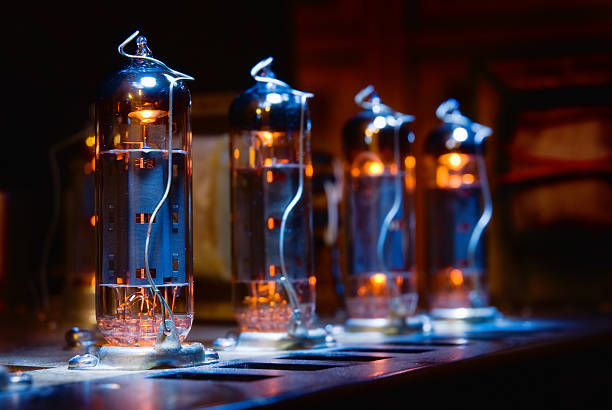
The first generation of computers lasted from 1946 to 1959. The fundamental components for memory and CPU circuitry in the computers of the first generation were vacuum tubes (Central Processing Unit). These tubes, like electric bulbs, produced a lot of heat, so they required frequent fusing. As a result, they were rather costly and only large businesses could afford them.
In the 1960s, batch processing was the most common operating system. Punch cards and paper tape were used for input and output, as well as magnetic tape. Machine code was the programming language of these computers.
Second Generation

From the late 1940s through the mid-1950s, this period was known as “the Age of the Transistor.” The transistor was utilized in place of huge vacuum tubes during this second generation, which spans roughly from mid-to-late-1950s until the early-1960s. The development of smaller, more efficient, and less costly machines resulted from this. They were given greater versatility by advancements in programming languages. New positions in computer engineering were created as a result of these developments, such as coders and software developers.
Third Generation
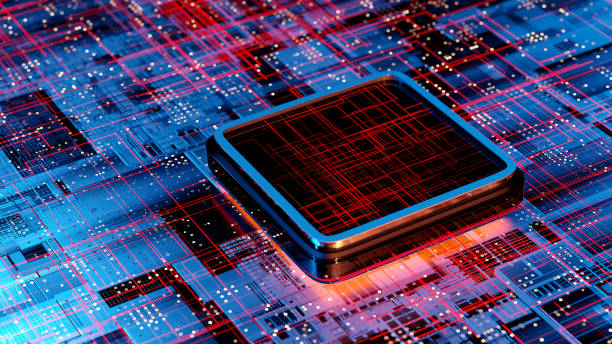
The third generation was from 1965 to 1971, and it is also known as the “golden age of computers.” The computers of third-generation employed Integrated Circuits (ICs) in place of transistors. A single IC has a lot of transistors, resistors, and capacitors, as well as all of the associated circuitry.
The invention of the operating system, which used a single central program to control access to several other applications, was one of many significant changes. A new programming language called BASIC was also developed by Dartmouth professors.
Fourth Generation

The fourth generation lasted from 1971 to 1980. The use of Very Large Scale Integrated (VLSI) circuits in computers of the fourth generation is an example. Microcomputers of the fourth generation were possible thanks to VLSI circuits with around 5000 transistors and other circuit components and their associated circuits on a single chip.
The fourth generation has seen significant improvements in terms of power, size, dependability, and price. As a result, the Personal Computer (PC) revolution emerged. In this period, time-sharing, real-time networks, and distributed operating systems were used. This era saw the use of high-level languages such as C++ and DBASE.
Fifth Generation

This technology is based on parallel computing hardware and AI (Artificial Intelligence) software. AI is a developing field in computer science that seeks to understand how computers can think like people. This generation employs all of the high-level languages such as C and C++, Java, .Net, and others.
Some of the main features of fifth-generation are discussed below:
Apple
The Apple Macintosh was first introduced in 1984. By 1986, there were over 30 million computers in the United States. Compaq Computers, Sun Microsystems, and Unisys Corporation are three other significant computer firms that emerged during the 1980s.
Microprocessors
In the late 1980s, Texas Instruments and Motorola rolled out new microprocessors. Windows, 1985, Windows 3.0, 1990, Windows NT, 1993, Windows 95, and Windows 98 became quite popular operating systems because of their use of graphics that made them simple to use.
In 1997, Microsoft’s Office 97 for businesses generated revenue of $78.8 million. Other prominent computer games from the 1990s include “Riven: The Sequel to Myst,” which was the top seller in 1997.
The Internet
Tim Berners-Lee created the Internet or the World Wide Web because of his efforts. He assisted in developing a system of “hyperlinks” that might be used to access related information, and it was put to use on the Internet in August 1991, dramatically increasing data sharing.
E-mail was a widely used channel for communication on the Internet. By 1998, there were over 5 million people using the Web, and the number of Internet users had increased dramatically throughout the 1990s.
The era of PCs and Laptops
The late-1990s saw the introduction of rental or lease options on computer systems, a large number of low-cost personal computers, portable laptop computers, and a shift in popularity from huge mainframe business computers to “client/server” architecture, which used a collection of smaller, faster, and cheaper computers.
Development of E-Commerce
One of the most significant developments was “e-commerce,” which allowed customers to browse through online catalogs and then place an order. Online purchases were made directly, and banking and investment activities were regulated via the Internet. According to estimates, there are over 400,000 businesses across the world with websites today.
By the end of the twentieth century, computers had become a regular occurrence in everyone’s lives. As the computer sector continued to contribute significantly to the strength of the American economy, demand for workers with computer skills was anticipated to rise.
Read more about Innovation in technology.
History Of Computer Monitors
Some of the computer monitors throughout history include:
- Punch card computer monitor (1940s)
- Cathode ray computer monitor (1950s)
- Green monochrome computer monitor (1960s)
- Color computer monitor (1970s and 1990’s)
Many people may not realize how much change has occurred when it comes to computer screens. For example, older computer displays were usually monochrome and green in color. This means that computer users had to deal with monochrome (black and white) computer screens up until the 1970s when computer technology began to improve.
Computer monitors today are high-resolution, digital displays that offer a much better picture than older computer monitors did throughout history. There is no doubt that computers have come a long way when it comes to computer screens.
Types of Computer Monitors

Computer monitors are becoming increasingly popular every year. The progress is generally accompanied by the use of modern technology. Modern technology has evolved at some point, and it has given rise to high-quality goods and cutting-edge technology.
We’ll go through each one of them in this section, along with an explanation.
Cathode Ray Tube (CRT)
A CRT is a type of computer display. A monitor for this sort of material is shaped like a hollow tube with a screen made up of cathode-ray tubes technology. Because the screen protrudes forwards (convex), people call them tube monitors.
The CRT monitor is huge, thus it takes up a lot of space. Traditionally, PCs have utilized CRT-based monitor screens (OS Windows XP and below). Because the size isn’t beneficial anymore, many computer manufacturers have abandoned it.
Liquid Crystal Display (LCD)
In contrast to a CRT screen, this LCD screen has more sophisticated technology incorporated. Because it employs a flat-panel display technique, the form is stamped flat (flat-screen monitor).
The screen LCD monitor resolution is greater than that of CRTs. Screen LCD monitors, too, have a sleek form and flat surface. It’s no surprise that many laptop producers utilize this type of monitor screen for their computers.
Light Emitting Diode (LED)
The next screen is known as LED or light-emitting diode display. The size and shape of the LED display screen are smaller than those of an LCD monitor. When light is required, this form of monitor uses more efficient LED backlighting technology.
The benefits of LED displays include a higher contrast, less negative environmental impact when discarded, greater durability than CRT or LCD monitors, and a very thin form. Because of this, they don’t produce much heat while in operation.
The major disadvantage is that they are more expensive, especially for high-end displays like the new curved models that are being introduced.
Plasma
The Plasma display is more advanced than the previous three types. Gas neon/xenon is sandwiched between two layers of glass plates to make these displays. The electric current at the gas layer causes it to react, creating pixels.
The quality of the plasma screens’ visualization is unquestionably superior. In addition, because of the integration of CRT and LCD technologies, the monitor screen Plasma has been designed to be more beautiful.
The Future of Computing: Today’s Monitors Bring Us Into a New Era
While you can still purchase vintage CRT monitors, they are thicker and consume more energy than contemporary flat-panel displays like liquid crystal display monitors. In 2007, LCD monitor sales surpassed CRT monitor sales for the first time. No, there weren’t suddenly more OLEDs in 1998. Since the 1980s, manufacturers have been developing them. The early LCDs, on the other hand, were costly and had several issues. When electrical current flows through a conductive material, such as an LCD, it changes color and creates bright, colorful pictures. LCDs allow laptop users to view high-resolution images, text, and video on small, lightweight displays.
Evolution of Computers from past to present
Mechanical Information Processing
IBM was formed through the development of the tabulator, a calculating machine created by Herman Hollerith in the late 1880s. This was the first application of punched cards rather than punched cards to automate a mechanical process like that of a player piano. From the 1940s through the mid-1950s, punch card technology drove information processing. The first calculators appeared in the 1930s. Throughout World War II, analog machines were replaced by the digital notion of zeroes and ones. UNIVAC, created by Remington Rand in 1951, was the first computer designed for use by the general public. The IBM mainframe computer debuted in 1952.
Computer Integration
The Remington 8100 in 1961 was the first computer with a color display. It was followed by the famous Model F, which debuted in 1964 and sold for over $1 million each. In contrast, IBM developed Fortran, one of the first computer programming languages, which was heavily based on mathematics. During the 1970s, the invention of the transistor, integrated circuits, and microprogramming paved the way for decreasing computer size. At the same time, CPUs speeded up computing processing, and memory improved data storage. In the early 1970s, Texas Instruments and Intel’s microprocessors ushered in a new era of tiny yet more powerful computers.
Rise of the PC
Computers were first utilized in business, government, and universities until the 1970s. Personal computers became available on the market for the public in the late 1970s with Apple’s introduction of the Apple I and Apple II. From 1985 onward, the software industry began to expand, with Microsoft and Apple as the primary firms. Beginning in 1984, IBM sold its DOS operating system in conjunction with its computers, making Microsoft a software giant. The Mac was released by Apple in 1984, establishing graphics and text as alternatives to systems that simply displayed text.
The Multimedia Culture
During the 1990s, computers grew in popularity and began to become a common home fixture. The release of the Microsoft Windows 95 operating system assisted to promote computer use among the general public. Soon, nearly every industry required software in order to improve its product or service. By the early 2000s, Microsoft had released XP and Vista, while Apple began selling OS X through Leopard. These advancements, as well as other popular software applications, opened up multimedia technology to the average consumer.
Revolution of Mobile
With the invention of more advanced PDAs in the late 1990s and early 2000s, as well as touchscreen smartphones and tablet PCs, portable computing has become truly mobile. In June 2007, Apple revolutionized the industry with the introduction of the iPhone; however, other firms quickly followed suit by releasing touchscreen phones and mobile gadgets. The digital revolution ushered in by this latest breed of devices was enabled by several technological breakthroughs, including computer processor miniaturization, flash storage, high-speed Wi-Fi wireless Internet, and 3G mobile data networks.
What Can We Expect in the Future of Computer Technology?
This is the age of computers and technology. Our lives have been totally transformed by computers and technology. We may now travel for months in only a few hours due to the invention of computers and technology. We can contact anybody we choose all around the world. With the aid of heavy equipment, we may finish a task that would otherwise take several days.
In a nutshell, we may state that technology is beneficial to us in almost every area of our lives. We can anticipate some incredible things to happen in the future at such a rapid pace.
We’ll go through some of the most interesting technological advancements we will be looking forward in the future:
Internet access will be free for everyone:

We now live in a time when the internet has become an important force in our daily lives. The majority of people spend the bulk of their time online. We may also call it impossible for us to conceive without the internet.
Despite the fact that the internet is extremely popular all around the world, it isn’t accessible to everyone. Regardless, we can see a rivalry between internet service providers. These businesses are only attempting to give us low-cost internet services, but they aren’t successful in doing so.
According to the Economic Times, over 48% of individuals have internet access. There’s a good chance that internet services will be free for everyone by 2050 as a result of this kind of popularity of the internet in our lives.
Artificial Technology:

Artificial intelligence is progressing at a rapid rate these days. We are correcting the data with the aid of artificial intelligence as many businesses do. Its reason is that artificial intelligence has the ability to receive and analyze data. Some predictions are also made utilizing artificial intelligence. These predictions are based on data analysis.
We’re also employing AI technology to get climate change predictions. For the purpose of displaying the greatest search results to their consumers, search engines are also utilizing artificial intelligence.
Artificial intelligence may also assist us in planning our travel. Artificial intelligence may help us accomplish even more in the future.
Robotic Technology:
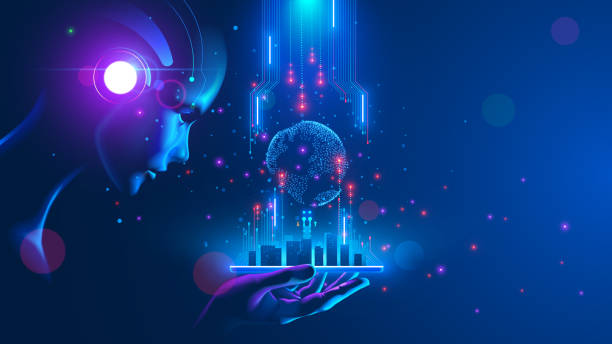
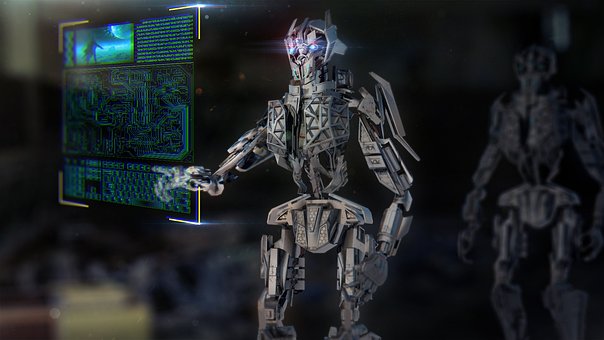
In the area of robotic technology, we’ve witnessed a lot of progress. Some well-developed nations, such as America, Japan, and Russia, have created robots with a variety of forms and are now employing them for a variety of purposes.
In recent years, China has developed a robot that can read the news just like a human news reporter. It is predicted that by the year 2050, we will be able to develop such robots that will be able to see, think, and react like humans.
Robots will take the place of humans in various fields, such as these robots will function like civil servants in many public sectors, professionals such as doctors and nurses will be replaced by them, and instead of our employer at work, these robots will take the role of our boss since they will be able to employ and fire employees based on their performance.
Hologram:

Microsoft is the world’s largest corporation, and it is bringing about a lot of technological advancements. This firm and a dissertation writing service has predicted that computer technology will not be complex in the future. It will be easy to use and adaptable.
It’s reasonable to assume that, in the future, such computers will be foldable. These computers will also be free of keyboard and mouse since all computer operations may be accomplished simply by tapping on the screen of the device.
Discovering Untouched Places with Drones:
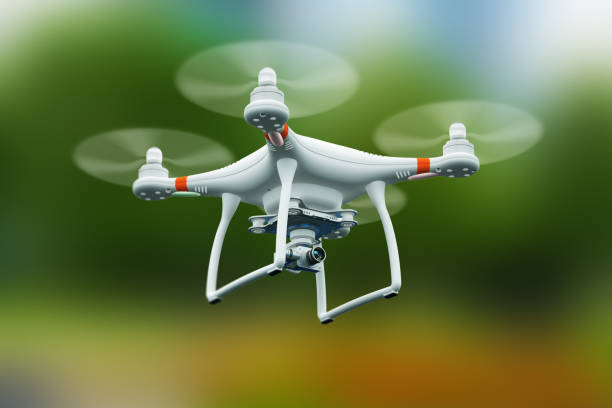
It’s a really hazardous thing for us as humans to go into such an area that contains underground mines. It is also dangerous for humans to drop a bomb. Such drones will be built in the future that will assist us in locating these locations. It will also be possible for us to disburse the bombs with the aid of robotic technology.
Final word
Computers have become an essential and helpful part of modern society. They’ve been utilized in a variety of industries, including mail-order and retail sales, as well as communication services like phone lines and internet access. Computers are found in every sector of society, from hospitals and shopping malls to universities and markets.
It is amazing to think about how far computer technology has come over the years. From computer monitors to handheld devices, there have been many changes in the way we use and view computers. We may summarize that technology is advantageous to us in almost every aspect of our lives in a nutshell. We can reasonably anticipate some amazing things to occur in the near future at such a fast rate. Whether you are a computer enthusiast or just someone who uses a computer for basic tasks, it is important to understand the history of this technology and how it has evolved over time. Thanks for reading!