What innovation model should you use for your company? That is the question that every business owner should ask themselves. Innovation can be defined as the process of making changes or introducing new ideas, and it’s becoming increasingly important in today’s competitive market.
Choosing the wrong model can have negative consequences on your business, but choosing the right model has positive ones! The model that you choose will determine how quickly your company grows and what innovative ideas are implemented into the business model. In this blog post, we’re going to discuss six different types of innovation models: Creator, Solution Builder, Leverager, Expander, Defender, and Fast Follower.
What is an innovation model?
An innovation model offers a detailed framework to help guide business model design and innovation. It provides a structured approach to stimulating new ideas and practices in a business model. Innovation models can be applied by large to medium-sized businesses, but it’s important for entrepreneurs to choose an innovation model that is right for their company.
The innovation model includes four components which are:
- The customer problem; what does your product or service do?
- How it meets the needs of customers and solves their pain points.
- What capabilities do you need to produce, market, and sell your solution. This can be either in the house or outside resources such as partnerships with other companies/firms.
- Finally, we have the model itself, the business model – how will you get paid for solving this issue? For example, if I am selling an innovative teabag that has weight loss properties then my model could include subscriptions where people pay me monthly to receive more tea bags each month (subscription model).
The Six Innovation Models
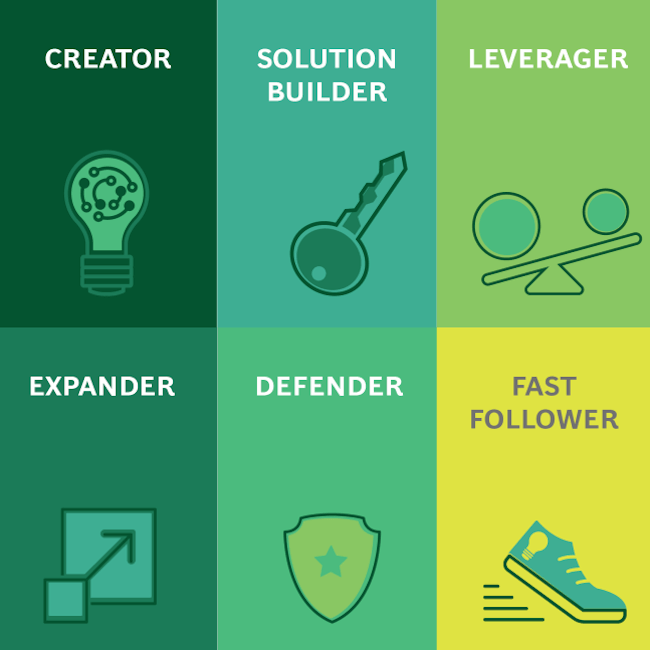
The six types of innovation models are Creator, Solution Builder, Leverager, Expander, Defender, and Fast Follower. Let’s take a closer look at each model, its characteristics, and the well-known companies who use these models:
Creator Innovation Model
The Creator Model is the model that most entrepreneurs fall into. You have a great idea and you want to create it! This model focuses on product innovation, which means that your goal is to develop products or services with new features and functions.
Creators are known to be change agents and they usually create new ideas. They like taking risks and trying out different solutions until they find the right one for their company, but this model is not recommended if you do not have a lot of cash flow or money in your budget.
This model gives the most freedom within an organization because the employees have complete control over what they want to create or improve on. In some cases, though this model may not work as well since employees have different interests so there will be no way to agree upon which projects need improvement or creation first.
Apple is the best example of the Creator model. They create new and innovative products each year such as the iPhone X, Apple Watch, iPad Pro, etc.
Tesla is another example of the model. They are always coming up with new ideas and ways to improve their model. Tesla creates electric cars in order to reduce the number of greenhouse gases emitted by traditional vehicles. The innovation strategy of Tesla is to transform the whole automobile industry.
Solution Builder model
This model works best for companies that have a lot of data from their consumers. Solution builders focus on business model innovation which means that your goal is to improve or develop an existing solution with more value for customers through continuous customer feedback. This model is best suited for businesses that already have a product or service, but they need to improve on it.
The solution builder model is used in large-sized businesses where managers can gather information about what consumers want. They also invest time into researching the market, analyzing trends, and understanding consumer behavior.
Solution builders are great at leveraging their resources to gain new insights from the market. However, this model can also be expensive since it requires a lot of time and money to gather data on consumer behavior before creating a solution model for them.
A good example of a solution builder model is the Starbucks model. They created coffee shops to get people together and improve on their model by adding new products such as mugs, etc., so they could gain more customer insight.
Nike is another great example of this model. They gather data and information from their consumers before creating new products to improve on the model.
Leverager Innovation Model
The Leverager model works best when your organization already has established industry relationships or you have access to other people’s resources. This model focuses on business model innovation, which means your goal is to improve or develop an existing solution with more value for customers through the use of relationships and outside resources.
This model requires a lot of networking skills since you will be relying heavily on others in order to meet company goals. You may need to contact suppliers, acquire industry expertise, and even use your relationships with other companies in order to make the model work.
If you are good at networking then this model may be ideal for you; however, if not it can become quite costly since it requires a lot of time to build new relationships that will benefit both parties involved.
The Leverager model is similar to the Solution Builder model in some ways, but it is more focused on creating a model that can be used by others. Leveragers are known as value brokers because they aim to find areas where business owners have gaps in their model. Then, they create a model that can be used by other companies to fill in those gaps.
Leveragers are not known for being risk-takers since most of the time they follow others’ strategies and models so this model is more likely to work well with large-sized businesses who know what consumers want or need.
One of the best examples of this model is the Zara model. Zara’s model is based on the fast-fashion model, which means they produce new collections every few weeks.
Another example is the model used by the company Salesforce. They created a new model that allowed other companies to use their services and develop cloud-based applications for consumers.
Expander model
The Expander model is the model that works best for companies who are looking to create new business opportunities by expanding their current market. They want to increase their revenue, diversify into different areas of expertise, or gain access to other markets where they have not been able to get in before.
This model can be a challenge since it requires a lot of cash flow and investment to expand into new markets. Expanders also need good marketing skills so they can attract as many customers as possible if they want this model to work out for them in the long run.
An example of the Expander model is the model used by Apple. They expanded into different markets such as smartwatches, tablets, and smartphones after they found success with their iPods and iTunes store.
Amazon is also a good example of this model since they expanded their company into different industries. This online giant began as an online book store and has since expanded to a variety of products including clothing, food, electronics, apparel, and footwear.
Defender model
The Defender model is another model that works best with large-sized businesses that have a lot of information about their market and consumers. This model is all about creating a new model that can protect your current business model from potential threats in the future.
This model works well with large-sized businesses because they have enough resources to analyze and predict what could happen if another company decides to move into their territory or industry. Defending your model can be done by creating barriers, protecting your model from possible threats, and improving on the current model. A lot of times, companies pursue the Defending model because they want more control over what happens with their business in the future.
Pfizer is a good example of this model. The pharmaceutical company was able to defend its model and even grow after it created a new model that protected its drug patents from competitors who wanted access to them.
Fast Follower Model
The Fast Follower model is also known as the Cloning model and it allows companies who want to build new business models based on an existing company’s strategy. They look at what other successful businesses have done in order to find out why they were successful and then model it.
This model is usually used by smaller-sized businesses that don’t have the resources or knowledge to create their own strategies, which means they are more likely to follow what other companies do in order for them to be successful too.
Fast followers are not known for being risk-takers since this model does not involve developing something new or different, but rather finding an already developed model and using it to improve upon the current model they work with.
An example of a fast follower model can be seen in Samsung’s business model, which follows Apple closely to produce create new designs and products to meet consumer demand quickly.
How to Choose the Right Innovation Model for Your Company?
Now that you know the six different innovation models, you might be wondering how to determine which model will work best for your business.
The first thing you need to do is identify what type of model would fit with your company’s values and vision. You also have to consider things like whether or not this model could bring in more revenue, how much it will cost to implement this model, and whether or not you have the resources needed for this model.
You also have to consider how well this model will fit with your organization’s culture and values. It is important to choose a model that your employees want to work for, which means they have to be able to see the bigger picture of why you are choosing a specific model over another one.
An organization’s specific context also plays a crucial role in choosing the best innovation model. An important factor to consider includes whether an innovation will scale or if its impacts can be extended beyond a single organization. In some cases, organizations might need to develop their own model from scratch if none of the existing models can meet its specific needs.
Read More: Wondering how to make a perfect business model?
What is Innovation Adoption Model?
Innovation adoption is a model that helps companies determine which model they should use when creating something new, especially if they are looking to create a new product or service. This model works by identifying consumers into different groups based on their willingness to adopt new ideas, models, or products.
Companies can use this model when they are trying to determine how many resources they should invest into creating a model that will be easily accepted by consumers in the market. This model is most popular with large-sized companies who have already created an existing model and want to determine whether or not consumers will accept this model if it’s brought into the market.
Categories of Innovation adopters:
Adopters are the backbone of any market, and without them, there would be no customers. Adopter demographics can help identify which consumers will most likely want your product when it first enters the market so you have an idea on how best to craft marketing messages for maximum impact!
One of the largest challenges in marketing is figuring out who your target audience is. There are five different categories that consumers fall into, generally based on their behavioral patterns and values- but not always! The faster an individual Consumer Group (AG) adopts new products or services compared with other groups can make them more profitable for businesses wanting to reach this type of clientele base.

Following are the 5 groups of adopters:
- Innovators(2.5%) – people who live for new ideas and technologies
- Early adopters(13.5%) – opinion leaders, trendsetters; quick to adopt new ideas and technologies.
- Early Majority(34%) – responsible family people who have a reputation for being cautious about new ideas/technologies.
- Late majority(34%) – risk avoiders, sceptics. Only willing to adopt when the model is popular and mainstream.
- Laggards(last 16%) – model followers; resistant to change, highly motivated by the desire for social acceptance and model prestige.
Conclusion
In a nutshell, the innovation model can help companies determine which model they should use when creating something new. It also helps them figure out how many resources to invest and whether or not the model will be easily accepted by consumers in the market. However, it is important to remember that your company’s specific context plays a crucial role when choosing an innovation model because you have to consider whether an innovation model will scale or if its impacts can be extended beyond a single organization.