The agricultural industry is one of the oldest industries in human history. It has gone through many changes over the years, but it remains vital to our society today. Modernization of agriculture is necessary for its survival and growth into the future. This blog post will explore how technology has helped modernize food production, with a focus on new technologies like precision farming and mobile devices.
With the advent of new technologies, farming has been transformed from an industry that was labor-intensive and required a great deal of land to one that is more automated and efficient.
The world population is expected to reach nine billion people by the year 2050. With that increase in population, innovation in food production has become a necessity. Many new technologies and innovation projects are focusing on producing more sustainable food sources.
In this blog post, we will be featuring some of the most recent and popular innovations in the agriculture and food industries.
The following are mentioned below…
Seed bomb
An invention called the ‘Seed Bomb’ which allows farmers to plant seeds with just one hand, as opposed to two hands or a shovel, has been developed by an Indian company. It was created to increase agricultural productivity in India, which is not growing as fast as it could be because farmers are struggling with the manual labor required for planting seeds. One of Seed Bomb’s inventors says that his inspiration came from watching a woman use her foot to plant tulips into the ground while she was walking.
The tool consists of a reusable outer shell made from recycled plastic, which is filled with native seeds that are appropriate for the area in which they will be used. The user simply has to place this case around dry soil or another substrate and press it into the ground using their foot. Once opened, each container sends out shoots capable of growing into mature plants.
‘Seed Bomb’ is an invention that not only provides a solution for Indian farmers but also has the potential to help families in other countries where food security and poverty are concerns. Additionally, it requires minimal training or education to use successfully which makes this invention even more valuable.
Gene editing tool
New technology developed by scientists at the University of Cambridge can help farmers to produce crops with higher yields and more nutrients. This invention could be particularly beneficial in India because the country only produces enough food to feed about 60% of its population.

This new technology uses a gene-editing tool that can make very specific changes in DNA which will increase crop yields and help to ensure that they are nutritious as well. The researchers who developed this technique believe it could be adapted to create specific traits which are of benefit to the farmer. For example, if a crop is susceptible to disease or does not grow well in certain soil types, this technology could be used to change its DNA so that it can thrive under these conditions.
The gene-editing tool is very precise, so it could be used to produce changes that would only affect the targeted plant. This reduces many of the risks associated with genetic modification and can help farmers avoid problems such as cross-contamination which occurs when transgenic crops are planted near other ones.
Chinese rice
Scientists in China have developed a new type of rice that is resistant to drought, saltwater, and cold temperatures.

This new rice is a form of japonica, which means it can be grown in northern China where the other types are not suitable. It has been genetically modified to produce more grain and withstand different climates than would occur naturally.
The scientists who developed this product believe that it will increase productivity because less water will need to be used during the growing season. Additionally, the rice will be able to survive in cold temperatures which is beneficial because it can grow more easily than other types of rice that are not adapted for colder conditions.
Although some people believe this type of genetically modified food should not exist and others feel that farmers could achieve similar results using conventional techniques instead, many experts agree that this type of rice could be used to feed millions of more people all over the world.
LED farming
Researchers from Wageningen University & Research Centre in the Netherlands have found a way for plants to grow without sunlight using only LED lights.

The team of scientists who developed this process believes that it can be used to help lower the carbon footprint associated with growing food. Additionally, they expect their new technology will encourage countries where farming is not possible because of lack of sunlight to become more self-sufficient in terms of food production.
LEDs are becoming increasingly popular and affordable for use in homes and businesses, which means that it will be relatively inexpensive to purchase the equipment necessary for growing food using this method.
The scientists who developed this new technology believe it could help many people in developing countries where crops are often unable to grow because of climate conditions or lack of suitable land. Similarly, researchers hope LED lights can make space-based farming more affordable in the future.
This new technology is not yet available on a large scale, but scientists are currently working to make it even more effective and efficient at growing plants without sunlight. They also hope that their work will inspire people to find innovative ways of solving global food security problems.
Appletree
A team of researchers from Oregon State University has created an apple tree that doesn’t require pollination by bees or other insects.

The new apple tree was developed through a process known as gene silencing, which means that its DNA has been modified to prevent certain genes from being expressed. Although this is similar to the way many genetically engineered plants are created today, it does not involve inserting any foreign genetic material into the plant itself – instead, it allows scientists to change the plant’s DNA to produce new traits or resist different types of pests.
Although this type of genetically engineered apple tree is not yet available on a large scale, researchers expect that it will be able to help farmers grow apples without having to worry about pollination or pest problems. They also believe their work can improve global food security by making it possible for farmers in different regions to grow apples that are more suitable for their climates.
Many people believe that genetically engineered food should not exist, while others feel concerned about the lack of long-term testing on this type of product before it becomes available at stores and restaurants.
The new type of corn that is genetically engineered to resist drought
A new type of corn that is genetically engineered to resist drought has been approved. This new product will be able to help farmers in areas where there are water shortages and droughts. The approval for the GMO was granted by USDA, which means this could become a widely distributed crop next year. By 2022 it’s expected that 70% percent of all corn grown will be this type. Controversy still exists around GMO foods, and scientists are continuing to study the effects of GMO crops on human health and the environment. The USDA has not yet approved other types of drought-resistant GMOs such as soybeans or wheat because they believe that there is insufficient evidence for these products right now even though some farmers are already using them.
Farming robots that can plant seeds and harvest crops
Currently being developed by researchers at the University of Sydney. The robots are equipped with several different sensors that allow them to make complex decisions about how and when to plant seeds, as well as where precisely on the field they should be planted.

The robot is also able to use high-resolution satellite imagery to decide which parts of the field to target. This information is then used by the robot’s onboard computer to determine how best to plant crops, as well as where and what types of seed, should be planted.
The technology was originally developed to allow robots to look after plants without having constant human intervention and monitoring. However, it has now been expanded so that the robots can also harvest crops, which is a particularly useful feature given that the global population continues to increase.
Robots are becoming increasingly common in agriculture and other fields of work, but they still face some challenges before they become mainstream. For example, both environmental factors like water quality, as well as economic issues need to be taken into consideration if robots are going to be at all cost-effective.
These challenges aside, many experts believe that robots have a key role to play in the future of food security and they could even help address problems such as climate change. This is because if more people were employed on farms, it would increase both agricultural activity and CO₂ emissions from farming equipment.
The tech that uses lasers to control pests
Currently being developed in Japan. The laser emits a low-energy beam that is harmless to humans and animals, but deadly to insects.

The technology has the potential to control pests in vast fields of crops without harming living things or causing damage by using harmful chemicals. It will also bring down operational costs because it doesn’t require the purchase of pesticides or other chemicals.
The main advantage of this technology is that it can be used to control pests in fields without harming the environment, as well as animals and humans. This will bring down operational costs because it doesn’t require the purchase of pesticides or other dangerous chemicals. It also has a low-energy beam that is harmless to humans and animals, but deadly to insects.
Self-driving tractor
Researchers at MIT create self-driving tractor prototypes which could be used on farms around the world. The company created a self-driving tractor prototype that can be controlled by an iPad. This means that it will become increasingly easy for farmers to farm larger areas of land and still meet growing demands for food around the world. The autonomous tractors also require less maintenance than standard ones because they do not need regular oil changes or other types of tune-ups.
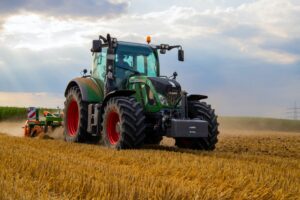
MIT’s tractor was designed to make it easy and affordable for farmers in developing countries to use autonomous vehicles on their farms, which can help increase food production without having to rely so heavily on labor costs. This type of technology could also make farming more profitable because less time will be needed to prepare the land before planting season begins.
Scientists believe this technology could make it possible for farmers to use autonomous tractors around the world, which means that more food can be grown and fewer people will need to work on farms. Additionally, they expect their tractor prototype will become even easier and cheaper to produce in the future.
Integrated pest management
Integrated pest management (IPM) is the usage of many different techniques to manage pests instead of using pesticides. The Integrated Pest Management system relies on a thorough understanding of all aspects that affect food safety and quality, including production practices, environmental conditions, post-harvest handling procedures as well as natural enemies or other forms of prey/predator relationships.
IPM is a broad-spectrum approach to pest control that focuses on long-term prevention of pests and their damage, by using multiple tactics such as; mechanical cultivation (weed removal), use of biological pesticides (natural predators or parasites), and the least disruptive or harmful chemicals available for reducing populations of plant-feeding insects and mites below levels where economic damage is observed.
IPM requires no, or very low amounts of pesticides that are targeted at specific pests rather than blanket coverage with large numbers of chemicals that eradicate many species indiscriminately. The goal of an IPM system is to manage pest outbreaks by reducing their population below the economic injury level and using the least toxic methods.
Satellites and drones for crop monitoring.
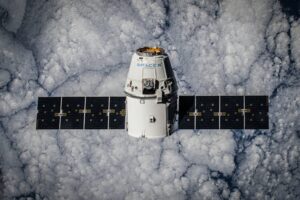
Satellites and drones are two of the newest technologies being used for crop monitoring, giving farmers more insight into problems with their crops before they become too serious. These tools are becoming cheaper as well, allowing many other businesses outside of agriculture to use them to monitor many different aspects of their business.
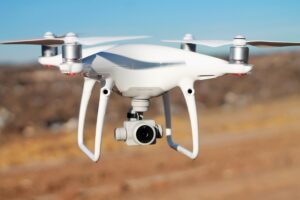
– This allows farmers to make more informed decisions about their crops. – They can also be used with other technologies such as machine learning and pattern recognition for even greater insight into the state of a crop or farm, allowing them to predict problems before they happen and address any issues that may arise.
Precision agriculture and mapping techniques
presently, in the farming industry, there is a huge push towards embracing precision agriculture techniques. This has to do with generating more accurate data through mapping and sensors for greater yields of crops across individual fields which are monitored by farmers using drones or other aerial devices. Second, there is even an emerging market where consumers can get real-time updates on their products from the farm to their doorsteps. This has driven down costs and improved delivery times for consumers which is a trend that will continue.

Currently, farmers are embracing precision agriculture techniques to generate accurate data across individual fields through mapping and sensors while using drones or aerial devices to monitor them. Furthermore, there is an emerging market where consumers can get real-time updates on their products from the farm to their doorsteps, which has driven down costs and improved delivery times for them. These trends will continue.
The market of selling information about a product is emerging quickly in today’s society. Farmers are embracing precision agriculture techniques by generating more accurate data through mapping.
Automated mechanical harvesters
Automated mechanical harvesters are being used in the farming industry to reduce labor costs and improve productivity. Their use is expected to continue, especially with their adoption by large agricultural corporations such as John Deere.
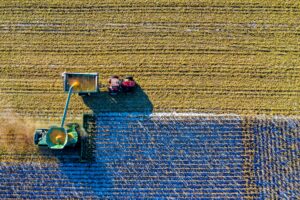
The full implementation of automated harvesting technology in farming practices has shifted focus from the generation of revenue to cost reduction and profitability. With the implementation of this technology, there has been a decline in labor costs as well as an increase in productivity which is expected to continue with larger agricultural corporations such as John Deere adopting it for its large-scale operations.
Today’s society focuses on selling information about products rather than generating revenue through price. This has led to the full implementation of automated harvesting technology in farming practices which includes cost reduction and improved productivity while shifting focus from revenue generation to profitability. With this, there is a decline in labor costs as well as an increase in productivity with larger agricultural corporations such as John Deere adopting it for its large-scale operations which will continue into
Hydroponics and vertical farming systems
Hydroponics is a system of growing plants without the use of soil or sunlight where nutrients from water solution give them enough nourishment needed for healthy growth.
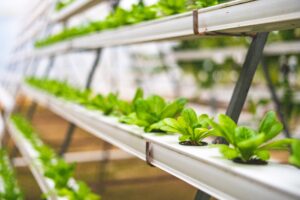
Vertical farming is a method of growing food with the use of many stacked layers in buildings, shipping containers, or other structures to produce crops without using much space at all.
The new trend is the rise in popularity from its origins as well as hydroponics. With higher costs for land, labor, transportation, and storage facilities; consumers are looking to diversify their supply chain by finding new sources to grow food while minimizing these overhead costs.
Conclusion
The future of food production is changing, and it’s more than just genetically modified crops. There are innovations in the agriculture industry that will change how we farm, feed our planet, and create sustainable ecosystems for generations to come. Let us know about your feedback via email or by leaving a comment below this blog post!