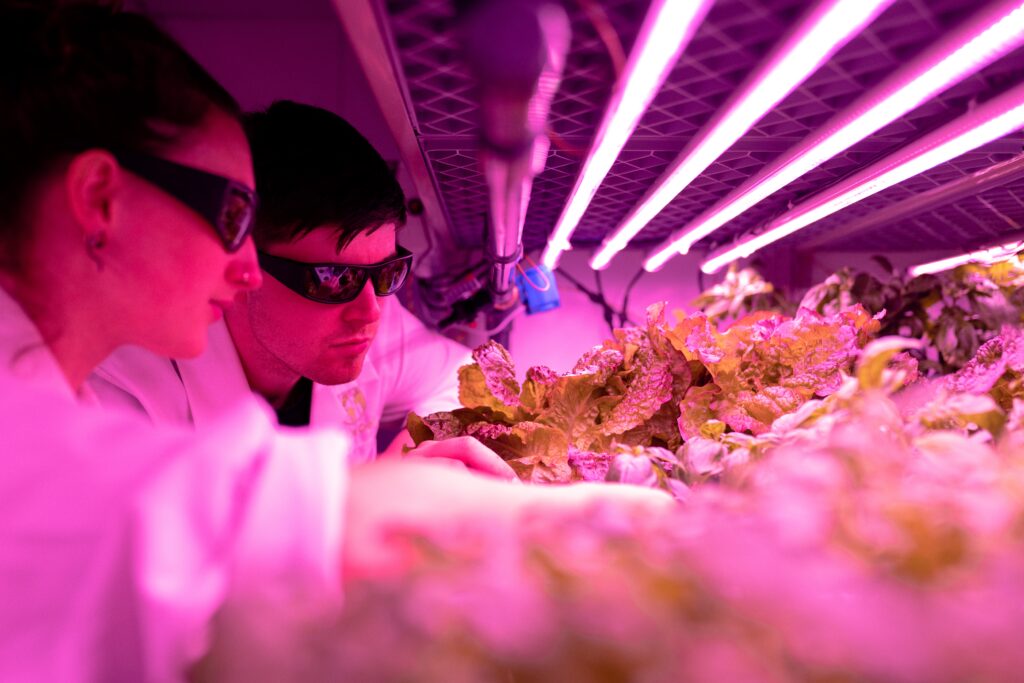
The world is changing, and so are the needs of humans. The population continues to grow at an alarming rate, which means that there will be less space for everyone on this planet. This has led to many people looking for innovation in food production methods that can lead us towards sustainability. There are some innovative ideas out there that will help with this issue, but it’s up to us as consumers to decide if these innovations are worth trying or not!
What is Innovation in food?
It’s only natural that the world is changing. The way we eat, learn, and even communicate are all fundamentally different than they were just a generation ago. Food innovation is not new either- it has been happening for centuries to improve people’s lives and make food more accessible. Innovations range from better transportation methods of goods to improving farming techniques or creating new flavors. There are many benefits to innovation in food but one of the most important ones can be found by looking at what happens when there isn’t any – famine!
Food innovation is about making food better than it currently is. It can be done through science, technology, and engineering. An innovation might involve a better recipe or ingredient, or it could be an entirely new type of dish that no one has ever seen before. Food innovation also changes the way we think about eating and cooking. For example, innovations like microwaves and frozen vegetables have changed the way people make dinner each night. Without these types of innovations, dinner would not be as fast and easy to prepare!
Take for example pizza: this delicious dish wasn’t always available at every restaurant, but thanks to the innovation we now get this delectable delight on demand!
How does food innovation look like?
The food sector has made a huge shift in the last month based upon industry statistics analysts have seen in this category. Supply chain and distribution have changed to be more cost-effective for the manufacturer. Many businesses or retailers have transitioned from keeping products stockpiled to a more “just-in-time” philosophy, where items are produced and get to where they need to go immediately before they move on shelves. Food scientists: The Pandemic is resetting the world’s way of thinking about post- pandemic food he says. The innovations will continue to change the landscape of food.

Why innovation in food is important
Food is one of the most important aspects of our lives. It’s what fuels us, nourishes us. And it can be a great source of joy. But too often, we take for granted how complicated food can be to make and eat; from sourcing ingredients to cooking them in the right way (or at all), to figuring out what you like or don’t like about food- there are so many choices! Innovation is key when it comes to making good food accessible and delicious for everyone- not just those with culinary training or access to high-end restaurants. That’s why I’m excited that companies like Soylent are working hard on innovating new ways to make nutritious food that everyone deserves access to!

Food innovation is important for many reasons
food Innovation is important because it helps with the most basic of needs: eating. Without innovation, people would not have access to a variety of food and they wouldn’t be able to fill the demand for nutritious and delicious choices.
The second reason innovation in food is important is because there are so many other benefits from innovative cooking techniques. These include things like lower calories, less fat and sugar, and better health for you and your family. Inventions such as the microwave have helped make meal prep faster and easier which has been crucial to keeping up with busy lifestyles today. Food innovation can be seen everywhere we look restaurants, grocery stores, cookbooks – even just on social media feeds!
The third reason why food innovation is so important is that it helps us explore new cuisines and cultures while also honoring our traditions.
The last being that it makes eating more enjoyable.
How innovation in food is changing the world
Below are the mentioned ways innovation in food is changing the world.
Food innovations giving start to new activities
If we take Italy for instance, more new start-up groups exist in Italy that operate on an innovative method of producing food sector products: product delivery or processes. According to the smart Agri-food Observatory elaborated by the Polytechnic Molino School of Management, 481 young innovative companies working in agriculture across Europe. There are currently six hundred Italians who make our economy very competitive and open to the invention of new foods. Despite its relatively small scope and limited resources in the sector, Cortilia has become the first small to medium firm delivering direct e-commerce for consumer-friendly goods connecting small producers of excellence with.
Innovations in food products
Food innovation usually is rooted in this desire for change present among our citizens today. The companies are traveling around the world to source different ingredients that have not previously been used as products around the world. Companies like SugaVida are developing a natural method to reduce our sugar consumption. StixFresh is another food innovation and places stickers on fruit to last up to 50% longer. The sticker provides some protection layer on the fruit. And the product was rated safe by the Food and Drug Administration. And it offers new flavor and increases our exposure to other cultures away from our home country – such as Garlidoux.

Innovative Food Science And Emerging Technology
The European Federation of Food Science And Technology presents a quarterly scientific journal called Innovative Food Science & Emerging Technologies. This is an excellent resource for anyone who wants to keep up to date with the business and breakthrough food innovation. Innovation will only grow as technology improves within the food industry. Improve in upcoming years and we already see futuristic solutions such as innovative meat products that offer sustainable solutions for the growing population that could be developed in the next few years according to the European Institute of Food and.

The fertilizer for growth?
Retail sales of plant-based foods directly replacing animal products rose 29% over the last two years to $5 billion. Industry insiders responded to the Tom Mattson Survey on food in a positive light when asked about the most significant factors for driving consumer demand. This may affect consumers who switch from animal-based to purely plant-based foods. S2G Ventures’ latest report suggests the plant-based business market grow up to $26 billion per annum by 2026. AgFunder Digitalk has uncovered additional drivers behind why alternative protein development could catch on with demand.

A new responsibility for companies
Italy requires tradition and newness and they see both as indispensable values on the table and in their life. The Italian expectation is very high and involves many aspects of the food business. Thus a significant amount of responsibility rests on the shoulders of the food industry. Thankfully more technological solutions are beginning to emerge which can make it more difficult for players. Tell me the solution? Are Italian companies ready to take on these challenges? Companies will need to adopt innovative technology to meet their future expectations the report says.
Breakthrough in the Food industry
Health food innovation is getting the spotlight. Ingredients including cannabis, mushrooms prebiotics, and probiotics are often added to some products today. In vitro meat is yet to be developed. We need to provide the best solutions while the population grows rapidly to maintain our food supply. Even top brands such as Ben & Jerry’s offer dairy-free ice creams now to satisfy the demand of consumers today. Products innovation is considered as a cure for those who do not enjoy meat.

Funds are still flowing
The Impossible Foods company received a total of $80 million in funding from three of the five projects. Finistere Ventures is working to analyze an investor response to pandemics in the food industry. Many people focus specifically on how new product innovations can change their lives, consumers, or all of the planet. Investors focused on beef, milk and eggs-free alternatives could soon focus on sustainability. It is hoped that the investment in agriculture innovation that will make farming more productive and affordable will help them achieve a larger yield. Investors on vertical farms will likely hope to improve the freshness of the crops.

Innovations that could build the food of the future
The adoption of things like 3D printing lab-grown meat, vertical farming, and the blockchain could see farming (for food) extinct. Let’s think about these two things. We could be on this edge of our retirement which made civilization possible. The future of food technology won’t last forever. This collection of innovations are wonderful proof of some progress in this discipline today. These are examples of some of the progress made today and this might spell the beginning of the post-human bio-economy in the future. These inventions in food technology could be the most thrilling.
3D food printing could change the way we eat forever
3D printing can make each final dish more personal per your specifications and tastes. The software’s capabilities will be working exactly compared to that of your expectations – by building the end product layer by layer. TNO hopes that introducing new techniques to food manufacturers such as convenience foods for consumers as well as supermarkets can become widespread. It will significantly reduce the excess cooking material in cooking machines by combining organic ingredients with high techno foods and drastically transforming the way we produce food recipes The future of food production looks certainly interesting. We begin to see ‘chefs’ tomorrow combining their culinary talents to push the limits of the art form of the food sculptor.
Robo chefs could change the way we all cook food
Robo chef is a collaboration between Moley Group and other companies such as Shadow Robotics Yacht Line DYSEGNO Sebastian Conran and Mark Cutkosh at Stanford University. It consists of a pair of fully articulated and automated robotic arms that can in every respect replicate the motion of people. Moley insists the robot chef has similar speed and sensitivities to humans. In the long run, the maker plans to manufacture a self-contained ‘kitchen’ controlled by touch-screen or by smart device app.

Cellular agriculture
Acellular farming is a means of agricultural production which is constructed from cell cultures rather than large-scale producers like traditional agriculture. This process takes two forms – acellular products and cellular products. The former are products made of organic molecules but lack living cells. Cellular products largely are made of or contain living cells or once-living cells. The end products are almost the same as regular foods harvested from animals but they have been produced entirely different ways. This style of technology is nothing new – it was first perfected in the 1970s. This technology has already been applied to making products such as Rennet or Vanilla.

Automated Grading Systems Like Aris’ AQS-System Could Be
Aris’S AQS-System is the first of its kind. It uses a computer system to identify different colors and to detect their presence by using software applications in an optical scanner. This system displays many profile deviations such as broken air wings or missing sections and poor coloration, and so can develop new features with time even learning more and improving. With automation such as this these sorts of work could be replaced by humans as they are more accurate and they can work relentlessly without requiring breaks or days off. Aris already has designed similar systems for graders of flower crops like orchids and pot plants at very high costs per hour.

Lab-grown meat could make animal farms and abattoirs a nightmare
Clean meat is developed from a stem cell obtained from donors and cultured in a lab for several weeks. The technology is developed by companies like JUST aiming to deliver its products to consumers sometime in 2018. It could create items like sausage and even foie gras. In vitro meat is very popular with environmentalists who believe it could greatly decrease the environmental impact of long-term commercial animal farming. There’s some evidence that the reduction in greenhouse gases in large-scale combustion could reduce carbon emissions by 71%. It is currently very expensive in comparison to the more conventional way of growing meat with costs of about $4,000.
Insect protein could replace beef, chicken, pork, and lamb
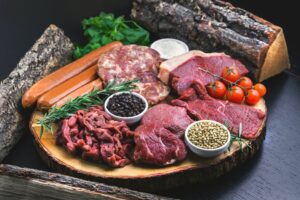
Kickstarter companies like Exo hope to use insects protein bars and other snacks in daily foods to become a staple in a diet. The tech startups have since attracted a new round of investment from the rapper Nas and the one-and-only Tim Ferriss. Insect proteins tend to contain approximately 40% protein and are packed with Vitamin B12 and have more calcium than milk. It also has more iron than spinach and can give you all the essential amino acids your body needs. Insect meat is also greener for the environment compared to four-legged alternatives. It requires less water (ca. 455 liters for 72 grams of crickets versus 6 grams in beef).

Personalized nutrition could be the future of eating plans
Nutrigenomics is the concept of customizing your diet to how your genetic makeup can predispose you to react to various foods also. Companies including DNAFit Nutrigenomem and Habit all offer programs which tailor your diet plan to your personal genetic. Some can also prepare and deliver your meals to you (for an extra fee) and others can absorb certain essential nutrients faster than others. As the discipline becomes more sophisticated it is generally accepted that food and nutritional supply will move away from a single size fits all approach and instead create a truly unique and personalized eating plan.
Plant-based protein could be the future of protein supply
Some plant types produce nutrient-dense foods to aid your body in retaining its optimal health. Plant-based proteins are easier to grow and are less harmful to the environment. Good sources include chickpeas, lentils Barley, almonds, quinoa spinach peanuts, and kidney beans; to name a few. Moreover there exist plant-based animal substitute foods such as tempeh and tofu. While they have obvious advantages over animal proteins however there are lots of disadvantages too. These substances are less easily absorbed when compared with animals proteins and often lack vitamin B12.
Vertical farming could be the future of agriculture
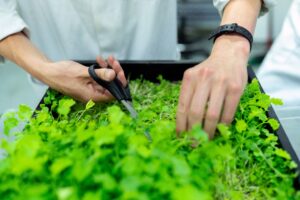
The concept was originally proposed by Dickson Despommier. He noted that an upscaling of the concept of rooftop gardens may be the future of farming. He envisaged purpose-built farming towers that could permit the production of crops all across the buildings including the roof. These types of farms can usually fall in between two-category hydroponics (gardens are grown on basins of nutrients. There is no soil requirement and artificial light also tends to come unless sufficient sunlight. All-year agriculture is possible and agrochemical compounds are eliminated.

Blockchain Could Revolutionize The Agri-Food Supply Chain
A distributed and collective public ledger system could improve transparency and verification for any transaction in the agricultural supply chain without third-party surveillance. Food giants have already begun using blockchains if they want to improve the sustainability of their product production.

Blockchain technology could track exactly where the farm supplier for a certain food product comes from in 2 seconds – normally completing the task in six days. The same is true with source sources – e.g. a single supplier – such as the U.S. Salmonella outbreak, which infected hundreds or maybe thousands.
High-pressure processing could extend the shelf life of food 10x
High-Pressure Processing (HPP) is a Cold Pasteurization process that involves introducing frozen foods into a high isostatic atmosphere (300-600 MPa ) that is transmitted by water. This combination of incredibly hot and relatively low temperatures safely preserves the flavor, food appearance, texture, and nutritional value of food. During the production procedure, no chemical or irradiating preservatives are necessary. HPP will increase food stocks by 400% by 2030 by 2050 or even 100 times if introduced into the market. Techniques such as micro-inactivation ensure food quality.
Innovative freeze-dried foods
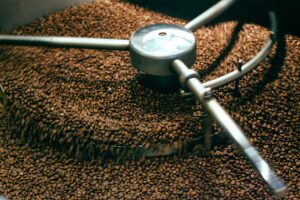
Innovative frozen foods allow firms the opportunity to have nutrients packed into their products but not have to worry over them going past their shelf life. Different production procedures are being tested and used to make their products last longer than in their natural, fresh form. This helps to meet the growing demands for healthy products without risking wastage which is often associated with fruits and vegetables in grocery stores in the hope of meeting the growing demand for healthy snacks without worrying about wastage and food safety.

A robot for food: Artificial intelligence
Artificial Intelligence can help increase food supply security and nutritional availability around the world. The FAO project that created WaPOR monitors and supplies relevant data about agricultural water productivity in Africa and the Middle Eastern. Since 2015 Feat Food was an Italian Start-Up providing healthy & balanced meals based on the dietary needs of the consumers. Through this service, the people who have no time to cook will always have a ready-made meal that can also provide for their health. AI is not merely for global applications the World Food Summit has in mind.
Biotechnology
Researchers develop a new soybean variety without the protein that causes allergic reactions. The new variety lacks the amino acid which causes allergy reactions for soybeans.

Data and intelligence of things for precision agriculture
TIM-Olivetti has created an accurate territorial data-management system that can detect whether data and monitor soil conditions. The project demands the activation of many digital and on the ground technologies (wireless sensors, precision control units cloud platforms, and dashboards for real-time monitoring) providing significant advantages. This is a reduction in production time to check its ripeness to the rise in quality of the products sold and reduce the environmental impact by reducing waste of water and energy. It’s also an opportunity to create huge databases concerning medium-long periods.
Conclusion
Food innovation is not new, but it’s more important than ever. As the world population continues to grow and demand food skyrockets, we need innovative solutions that can sustainably feed everyone. This blog post has discussed some of those innovations from a variety of perspectives–from how innovation could change the way people eat to what type of foods will be available in the future. We invite your feedback on this topic as well as other topics you would like us to cover by emailing. Or if you want to leave a comment below this blogpost please do!