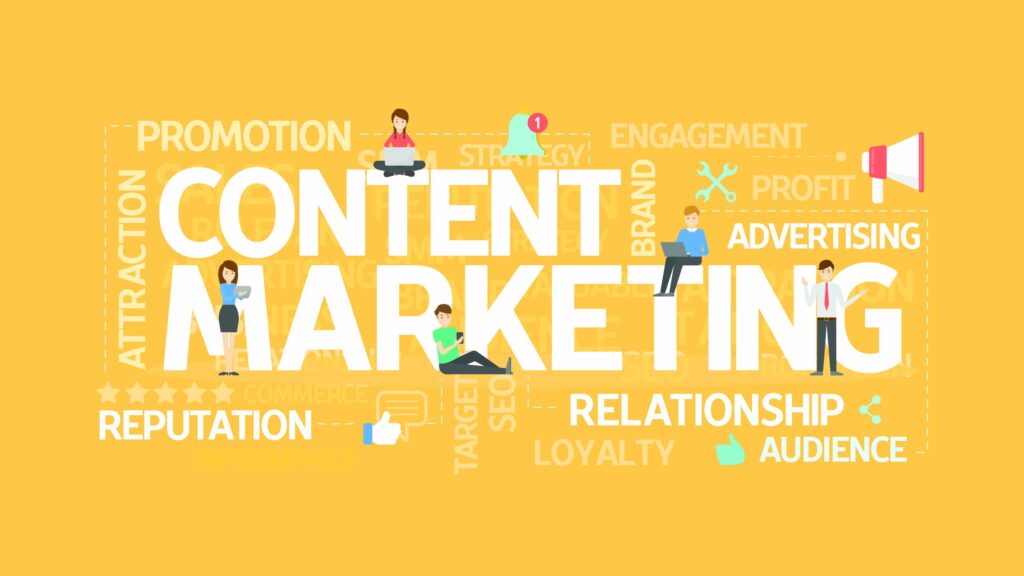

Content marketing is a type of marketing that involves the creation and sharing of online material (such as videos, blogs, and social media posts) that does not explicitly promote a brand but is intended to stimulate interest in its products or services. There are many benefits to content marketing: it requires fewer resources than traditional advertising; it reaches your target audience in places where they already spend their time, and it can lead to increased traffic on your website! In this post, we will discuss what content marketing is, how you can generate leads with content writing, and some tips for success!
At the end of the day, the ultimate goal of content marketing is to generate leads for your business by reaching out to potential customers through various types of content. In this post, we will discuss what it takes to be successful with content marketing.
What Is Content Marketing?
So as we discussed, the goal of content marketing is to generate leads for your business by reaching out to potential customers through various types of content. To do so, you need three things: great content, an effective distribution strategy, and conversion optimization expertise.
Great Content isn’t just created on whims. It requires tumultuous hours of effort and planning but an in-depth sense of creativity coupled with the ability of the writer to connect to the topic as a whole. Content creation is by its essence the bread and butter of content marketing, and if it’s not done well, no distribution strategy in the world can save you from dismal conversion rates.
Read about: Marketing Innovations: What They Are and How to Implement Them?
What is Content Creation?
Content Creation or Writing by its meaning is the ability to write and make a story out of it. It is the ability to write in detail, capture someone’s attention with a great headline, and communicate the message you’re trying to put across in a way that makes people want to read more.
Your content must be high quality and relevant to your target audience. This means that you need to produce content that is interesting, informative, and useful. It also needs to be well-written and properly optimized for search engines.
Get to Know about: Digital Measures a CEO Needs to Take for Digital Success
Steps in writing or producing Content
Content creation although being simple still requires the creator or writer to follow certain steps and techniques to ensure that the content that is being generated is feasible and likely to receive views and conversions. The following are the steps needed to propose an effective and efficient content for the masses:
Identification of the Audience:
It is important to identify your audience and their needs. This will determine what content you should create, how it should be created and distributed. Once this has been achieved then Content Strategy can be initiated with better knowledge on who you are targeting which in turn helps generate more targeted leads for your business growth!
Generation of Ideas:

A writer must be innovative when generating ideas as there is a big competition out there and not everyone gets an opportunity to shine through so coming up with engaging yet creative fresh new ideas that spark interest from the reader would definitely help them stay tuned until they reach the end of reading or watching whatever material you have provided for them. Without good idea generation, it’s likely that no one will bother reading through your content no matter how well written it is so put in the extra effort to brainstorm and come up with great topics.
Research:
This is a very important step as research helps you gather more information about what you are writing about, understand the audience better, and get clued in on any current trends related to your topic or industry. When researched properly, data-backed articles always perform better than those without proper substantiation so make sure that at least some part of your process includes solid research!
Learn about: The Importance of Research and Development for Innovation
Drafting:
Once all the necessary information has been gathered, it’s time to start drafting your content. Remember to keep it short and sweet – people don’t have time to read long-winded articles these days. Break down complex information into easy-to-read chunks, and use headings and subheadings to help organize your content.
Editing:
This is the final step before publishing your content. Make sure you give it a good edit and proofread for spelling and grammar mistakes. Also, be sure to check for accuracy – you don’t want to publish inaccurate information that could damage your reputation.
Publication:
Once everything has been edited and checked for errors, it’s time to hit publish! Be sure to share your content on social media, submit it to article directories, and include a link in your email signature. The more places you can get your content seen, the better!
Once you have created great content, you need to find ways to get it in front of the right people. The first step is to promote the content itself – share it on social media, submit it to article directories, and include a link in your email signature.
The next step is to identify where your target audience hangs out online so you can start sharing your content with them there as well. For example, if you’re targeting dog owners then make sure that some of your shared links lead back to blog posts or videos about dogs!
Effective Distribution Strategy
An effective distribution strategy ensures that your content reaches the right people at the right time. This means that you need to know who your target audience is and where they spend their time online. For example, if you’re targeting small business owners, you might want to distribute your content on LinkedIn, Twitter, and other social media platforms frequented by entrepreneurs. And finally, conversion optimization experts will help you turn website visitors into leads by persuading them to fill out a form or call your business for more information.
An effective distribution strategy ensures your content reaches the right people at the right time. This can involve anything from email marketing to social media outreach to paid advertising. However, no matter how great your content is, if it’s not reaching the right people, it’s not doing its job!
Learn more: Marketing Insights: Effective Strategies for Optimizing Your Marketing Strategy
Content Distribution Strategy
A content Distribution strategy is a great way to get your content in front of a larger audience. To create an effective distribution strategy, you first need to know where your target audience hangs out online so that you can start sharing your content with them there as well. For example, if you’re targeting dog owners then make sure that some of the places where you share links lead back to blog posts or videos about dogs!
Once it’s published and shared on social media channels like Facebook and Twitter, be sure to submit it to article directories such as eHow and Answerbag – these sites offer decent exposure for new articles since they are indexed by search engines. Finally, don’t forget to include a link in your email signature because everyone likes easy access!
It is important not to rely on just one method of content distribution. Instead, use a variety of methods to reach as many people as possible. This way, you’ll be sure to get your content in front of the right people at the right time.
Paid Distribution
If you want to give your content an extra boost, consider using paid distribution methods such as Facebook Advertising or Google AdWords. These platforms allow you to target specific demographics and interests so that your content reaches the right people. And since they are pay-per-click models, you only pay when someone clicks on your ad!
Read more: Financial Innovation: A Primer with Examples
Reaching Your Target Audience
One of the main goals of content marketing is to reach your target audience with your message. However, this can be difficult if you don’t know who your target audience is or where they spend their time online.
One way to identify your target audience is by creating buyer personas. A buyer persona is a fictional representation of your ideal customer, based on data from market research and real-life customers. This gives you a better understanding of who you’re trying to reach with your content.
Once you have a good idea of who your target audience is, it’s time to start thinking about where they spend their time online. For example, if you’re targeting small business owners then LinkedIn might be a good place to share your content. Or if you want to reach parents, then consider sharing links on parenting websites and forums.
The key to success with content marketing is to find the right balance between content creation and distribution. You want to make sure that you’re putting out interesting, useful material on a regular basis while also getting your links in front of as many people as possible.
Another thing to consider in content marketing is Conversion Optimization.
What is Conversion Optimization?
Conversion optimization refers to techniques that help you turn website visitors into customers. This may include things like A/B testing different versions of your landing pages or using call-to-action buttons to encourage people to buy your product.
To create a successful landing page, your content needs to make sense in the context of what you are offering – it should be clear and concise with no distractions or additional information that might turn off potential customers. Using persuasive language throughout the page is also key!
As for call-to-action buttons, they should stand out on your website so that people know exactly where to click when they’re ready to purchase your products! For example, using bright colors like red can help increase conversions because these colors tend to attract more attention than other hues. People also respond better when button text matches their expectations (for instance, if someone has clicked through from an email campaign about “15% Off Sitewide,” he/she may expect the “Add to Cart” button to say “Add to Cart – 15% Off”).
One of the most important aspects of conversion optimization is tracking results. This means setting up goals in Google Analytics and tracking how many people visit your website, what pages they visit, and how long they stay on each page. By doing this, you can identify which content is most effective at converting visitors into customers and make changes accordingly!
In order for content marketing to be successful, it’s important to remember that it takes time and effort. You can’t just create a few articles and expect sales to start pouring in overnight! However, if you’re patient and put in the work, you’ll see a noticeable increase in traffic and conversions over time!
If you have any questions about content marketing or how it can help your business, feel free to get in touch! We’d love to help. But if you have all of these things in place, then congratulations! You’re ready to start!